Finance
Cash Flow
What actually arrived and what actually left. A profitable business can still run out of money, and this is the report that shows it coming.
Last updated 2026-10-13
DigitalKey ERP — Docs · digital-key.co/docs/finance/cash-flow
Requires subscription
finance.view3,000 IQD / monthCash flow versus profit
Profit counts sales when they happen. Cash flow counts money when it moves. Sell on credit and you have profit with no cash; buy stock for cash and you have an outflow with no effect on profit until it sells.
WarningBusinesses rarely fail because they are unprofitable on paper. They fail because they cannot pay a bill this week. If you read one finance report regularly, read this one.
Finance — Cash flow report
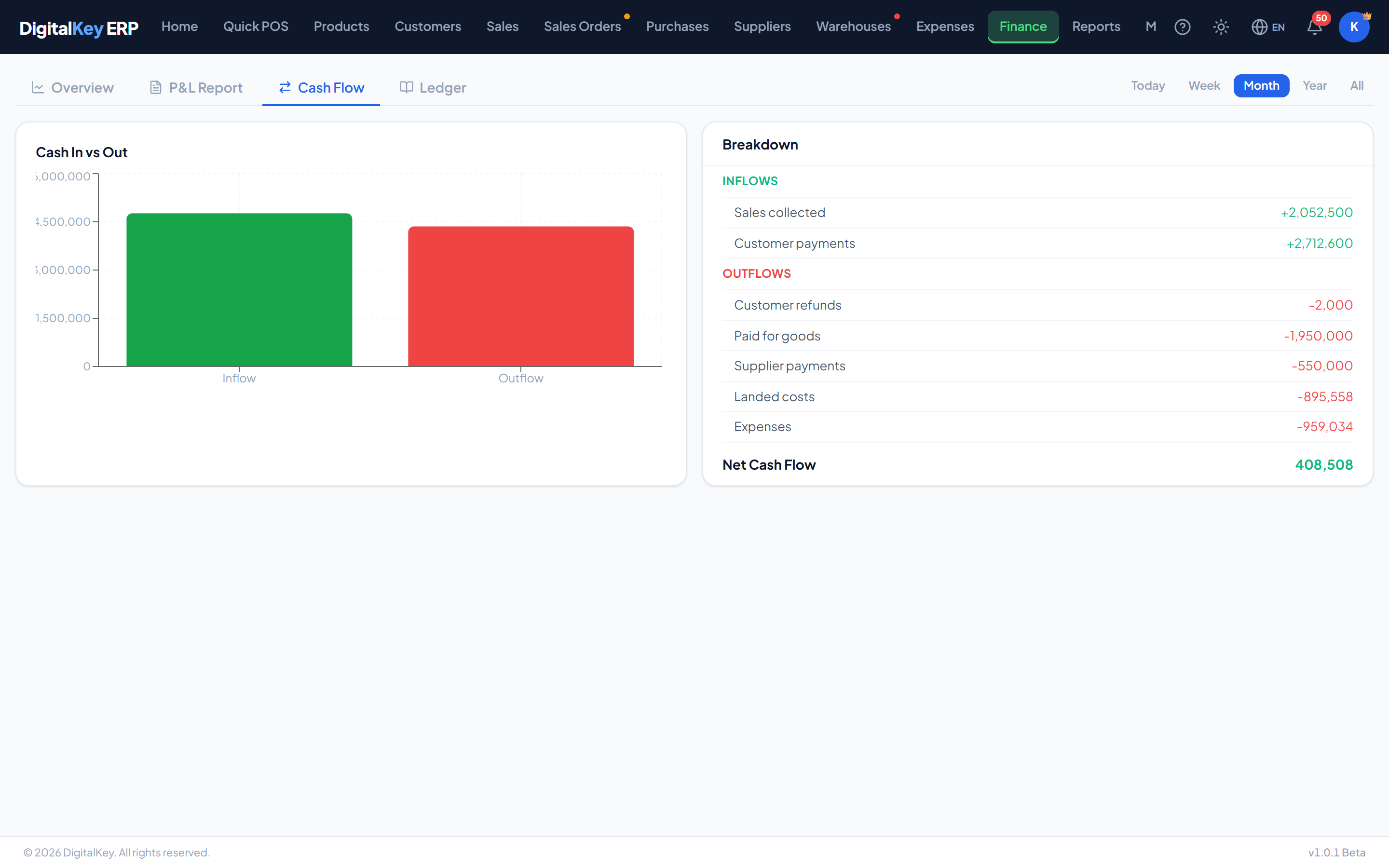
Report fields
GET /api/v1/finance/cash-flow
| Parameter | Type | Required | Description |
|---|---|---|---|
from_date | date | Required | Start of the period. |
to_date | date | Required | End of the period. |
inflows[].label | string | Optional | What the money came from. |
inflows[].amount | decimal | Optional | How much. |
outflows[].label | string | Optional | What the money went to. |
outflows[].amount | decimal | Optional | How much. |
total_inflow | decimal | Optional | All money in during the period. |
total_outflow | decimal | Optional | All money out during the period. |
net_cash_flow | decimal | Optional | Inflow less outflow. Negative means more left than arrived. |
What counts as an inflow
- Cash taken at the counter on cash sales.
- Payments received from customers against outstanding balances.
- Any part payment taken at the time of a postpaid sale.
NoteA postpaid sale with nothing paid produces no inflow at all in the period it was made. It appears as revenue in the P&L and as a receivable, and only reaches cash flow when the customer pays.
Refunds handed back on returns of sales that had been paid for are taken off the money coming in. Returning a credit sale moves no money — it only reduces what the customer owes.
What counts as an outflow
- Goods— what has been paid on purchase invoices, whether on delivery or later. A later payment raises the invoice's paid amount and is counted once, there.
- Customs and transport — landed costs, counted once: the part booked as an expense is in expenses, the part absorbed into stock is counted separately.
- Expenses recorded in the period — except damage write-offs.
Damage is a loss, not a paymentWriting off damaged stock is in profit and loss as an expense, but it is not in the cash flow. The stock left; no money did.
WarningVoiding a purchase does not bring back a customs bill. The void takes the value out of stock again, but the money paid to customs stays spent.
Reading a negative net cash flow
Negative is not automatically bad — it depends on the cause. Worth checking, in order:
- Stock buying — a big purchase run is an outflow now and profit later. Usually fine, provided the stock actually moves.
- Uncollected debt — if receivables are climbing while cash falls, the problem is collections. See Customer Management.
- Rising overheads — check the monthly expense trend under Managing Expenses.
TipCash falling while profit holds up is nearly always a collections problem. The debt schedule, ordered by expected payment date, is the fastest place to act on it.
Choosing the period
NoteShort periods are more useful here than in profit and loss. A weekly cash flow will show a squeeze building; a monthly one often reveals it only once it has arrived.
Related
- Profit & Loss — profitability rather than liquidity.
- Recording Payments — turning receivables into cash.
- Finance — receivables and payables side by side.